


Why Centralized Master Data Management Makes All the Difference
In many retail organizations, master data is scattered across multiple systems, spreadsheets, and departments. The result: duplicate data entry, errors in downstream processes, and growing coordination overhead — especially across multiple locations, changing teams, or complex organizational structures.
Centralized master data management therefore delivers far more than basic data administration: employee master data, organizational assignments, working time models, roles, cost centers, and location-specific attributes are maintained in a structured way and made consistently available across workforce planning, time management, and reporting.
Central
Manage all your employee and organizational data in one central place.
Consistent
A single source of truth for employee master data across HR, planning, time management, and reporting.
Relieving
HR teams, managers, and administrators are freed from the burden of administrative overhead.
Flexible
Map your organizational structures, roles, and responsibilities with precision.
Reliable
A reliable data foundation for planning, time tracking, and reporting.
The Trade Trusts SEAK
From retail chains and bakery franchises to service providers and cinema operators: multi-site businesses across Germany rely on SEAK to manage their workforce.
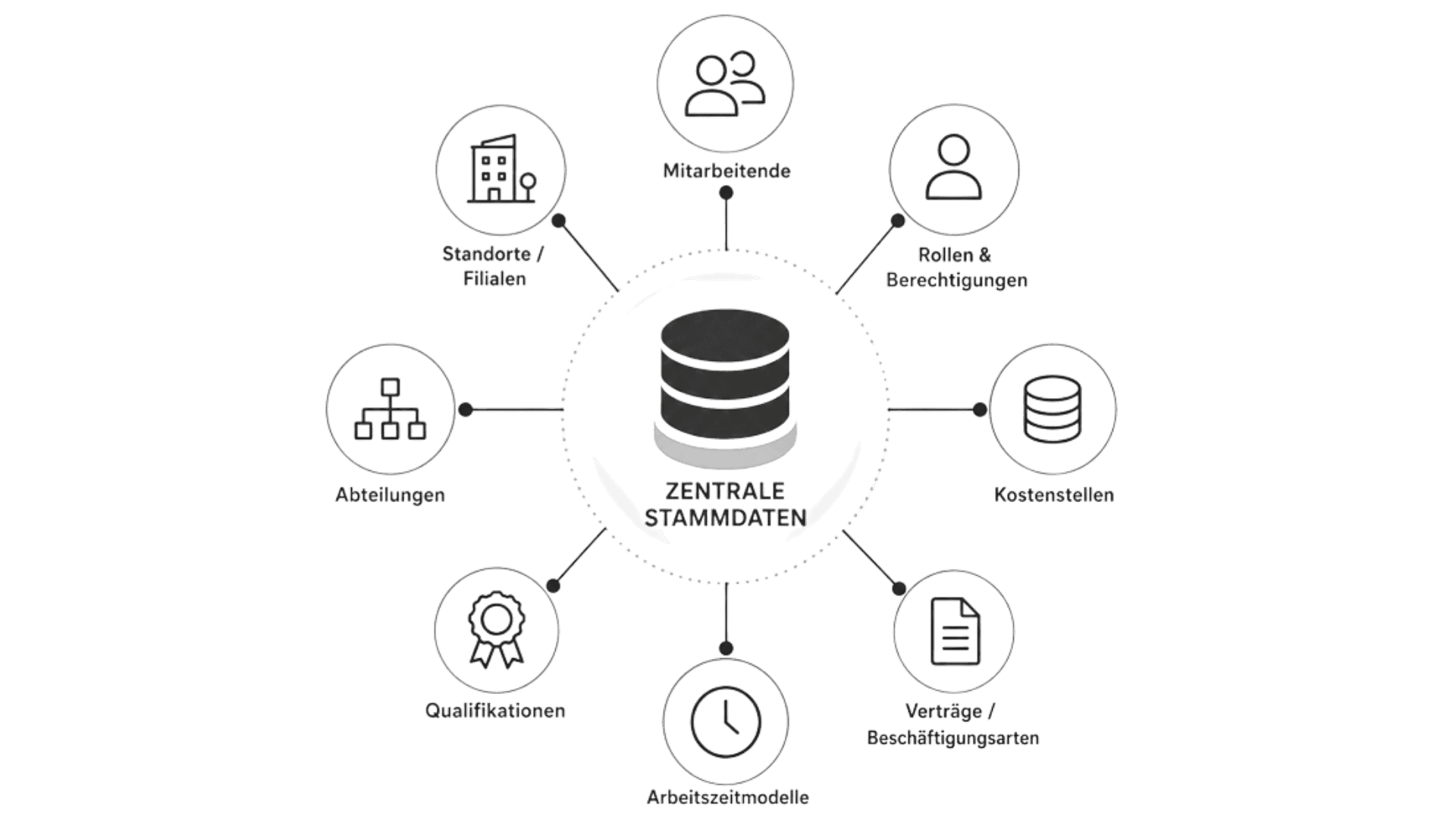
Master Data as the Single Source of Truth
Employees, roles, departments, locations, qualifications, and cost centers — all essential organizational structures are managed in one central place and made consistently available across scheduling, time management, the Employee Self-Service Portal (MSP), and reporting.
Features of SEAK Master Data Management at a Glance
Well-structured master data management gives your operational and administrative processes a reliable foundation to work from — enabling faster implementation of changes and significantly more efficient downstream process control.
Central Master Data Management
Employee, organizational, and structural data — centrally managed and always up to date.
Clear Organizational Structures
Map locations, departments, teams, and responsibilities in a way that's clear, transparent, and fully flexible.
Consistent Data Usage
All relevant processes access consistent information and operate from a single source of truth.
Flexible Role Logic
Permissions, features, and assignments can be configured to match your organization's structure.
Workforce Schedule Management
Manage time-tracking master data in a structured way and use it reliably across all your processes.
Multi-Location Support
Branch-based and decentralized organizations can be managed clearly and efficiently.
Foundation for Downstream Processes
Master data serves as a reliable foundation for planning, time tracking, absence management, and reporting.
Master Data Management Software for Retail and Adjacent Industries
Professional master data management is relevant across every industry. Wherever large teams, multiple locations, or diverse roles converge, a centralized data foundation delivers measurable relief.

Retail

Service

Bakeries
Schedule a Free Consultation
We'd love to walk you through your options in a personal online meeting via Zoom and help you find the ideal workforce management solution for your business. Simply pick a time that works for you — your Zoom link will be sent to you by email.
Alternatively, you're welcome to reach out via our contact form — we'll get back to you promptly. Or give us a call at: +49 40 238 348 – 000
Frequently Asked Questions About Master Data in Workforce Management
What Are Master Data in Workforce Management?
Master data encompasses the core, enduring information about employees, organizational structures, and working time parameters. It forms the foundation for all operational and administrative processes.
What does master data management actually mean?
Master data management is the systematic process of capturing, maintaining, and distributing core business data — such as employee records, locations, and working time models — so that all connected processes operate from a single, up-to-date source of truth.
Why Does Clean Employee Master Data Matter?
Because so many downstream processes depend directly on it. Incomplete or inaccurate master data frequently leads to extra work, planning errors, and unnecessary corrections.
What types of data can typically be managed?
For example, employee records, team and location assignments, roles, working time models, organizational structures, and other process-relevant attributes.
For Which Companies Does Master Data Management Make Sense?
Designed for organizations that want to manage their workforce processes in a structured and efficient way. Particularly valuable for businesses with multiple locations, large teams, or complex organizational structures — across retail, services, healthcare, and manufacturing.
What are the benefits of centralized master data management?
It eliminates duplicate work, improves data quality, and creates a reliable foundation for planning, time tracking, and reporting.