


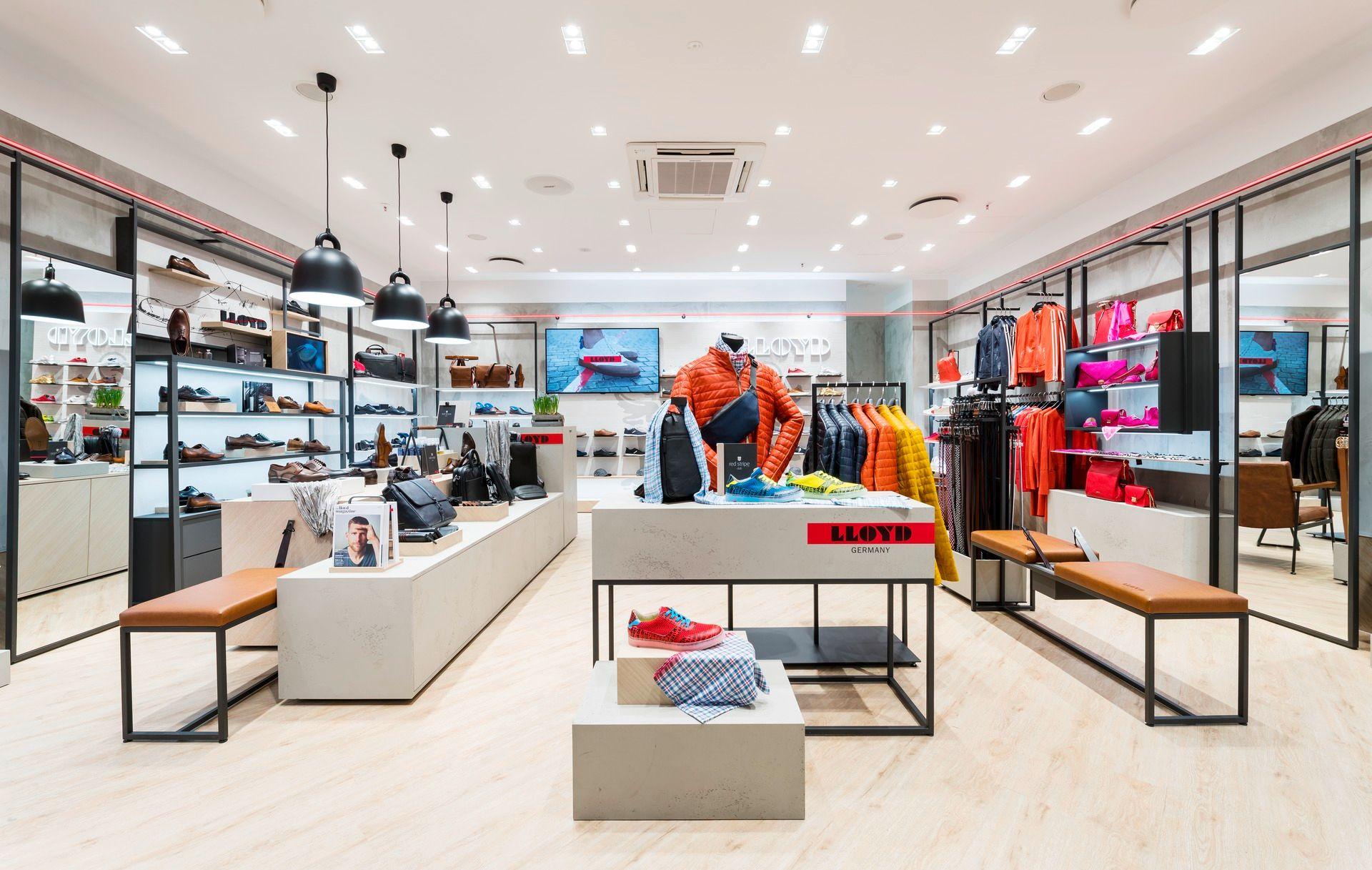
More shoes sold per labor hour
How premium footwear brand Lloyd has managed its 29 concept stores and 8 factory outlets with SEAK since 2016 — moving beyond Excel spreadsheets and blanket minimum staffing, toward intelligent intraday workforce management.
Lloyd at a Glance
Lloyd is an international premium business footwear brand headquartered in Sulingen, south of Bremen. Founded in 1888 as H. F. Meyer Shoe Factory in Bremen, the company was rebranded as Lloyd in 1927. Today, Lloyd employs approximately 1,500 people worldwide, including 400 in Germany.
Team
Approx. 1,500 employees worldwide, including 400 in Germany; 200 in our own retail division
Locations
29 Concept Stores and 8 Factory Outlets across Germany
SEAK customer since 2016
Workforce planning, staff scheduling, and time management – complemented by a short-time work module introduced in response to the pandemic
Numbers, Data, Facts
Own retail locations in Germany: 29 Concept Stores and 8 Factory Outlets
Retail staff, scheduled via SEAK
Plans Lloyd workforce requirements, deployment, and time management with SEAK
The Challenge
Lloyd has historically been an industrial and brand-driven company. As it expanded into its own retail operations — now comprising 29 concept stores and 8 factory outlets — Lloyd encountered the challenges that keep retail managers up at night. Chief among them: aligning staffing levels precisely with customer footfall and planned revenue targets. That simply wasn't achievable with Excel and a blanket minimum-staffing approach.
Five specific pain points were holding them back:
Excel-Based Shift Scheduling
Excessive manual effort, no single source of truth, no automatic transfer of targets into the plan. Every planning cycle was a manual exercise.
Flat Minimum Staffing Rule "4 on the Floor"
Previously, scheduling followed a simple rule of thumb: "at least four sales associates on the floor at all times." This guideline was never validated against actual demand or business need — resulting in chronic overstaffing during slow periods.
No Intraday Frequency Reference
Staffing levels were not aligned with expected customer traffic. Selling hours were set as a flat daily allocation, rather than being distributed around peak periods.
Short-Term Planning Horizon
Planning was done on a monthly basis — with a monthly correction cycle to follow. Long-term forecasting wasn't possible, and short-term adjustments were purely reactive.
Staffing Hours Without Revenue Justification
Lloyd suspected that staff hours were being scheduled in ways that couldn't be justified by foot traffic or revenue. The hunch was there — but the data to back it up wasn't.


Alice Nachtigall, HR Business Partner, Lloyd
"Before, planning was based on a blanket rule — something like 'There must always be at least four sales associates on the floor.' But that simply isn't accurate. During slow periods, that's overstaffing. Yet because there was no way to align scheduling with projected revenue, everyone just followed the rule."
The Decision: How We Connected with SEAK
Vendor Selection 2016: SEAK Recommended by Group Headquarters
In 2016, Lloyd launched a formal vendor selection process: a shortlist of potential suppliers was contacted, and each presented their solution. SEAK was already known to Lloyd's group headquarters and had built a strong reputation there — which ultimately proved decisive. The goal was clear: accelerate digitalization, streamline processes, and replace Excel spreadsheets and gut instinct with a data-driven approach to workforce management.
The Implementation: How SEAK Was Rolled Out at Lloyd
Annual Planning with Daily Revenue Forecasting — No More Monthly Excel Fixes
Lloyd now manages staffing requirements and workforce scheduling through the relevant SEAK modules, with time tracking also handled entirely within the platform. The central shift: monthly Excel plans subject to constant manual correction have been replaced by annual planning driven by daily revenue forecasts. Store managers receive automated suggestions for optimal staff distribution throughout the day — adjustments can now be made conveniently on a weekly basis, with staffing levels plannable two to three months in advance.
The pandemic added an unexpected chapter: SEAK responded quickly, rolling out a dedicated short-time work module that Lloyd was able to deploy without delay. For a branded retail business dealing with rapidly fluctuating opening hours, this proved to be a vital stabilizing force.
What the software actually covers
Annual Planning
Staff hours and staffing requirements across the year — seasonality, public holidays, school breaks, and promotional campaigns are all mapped within the system.
Daily Revenue Forecast
Historical data becomes the foundation of demand and workforce planning — replacing gut feeling with accurate forecasting.
Automatic Shift Suggestions
Per day and department — demand-driven, with optimal distribution throughout the day. Fully adjustable by store management.
Weekly Corrections
Planning adjustments happen weekly instead of monthly — keeping forecasts closer to actual sales performance.
Forward Planning 2–3 Months
Staff schedules can be set two to three months in advance — giving your team the planning certainty they need.
Qualifications & Contract Logic
Qualifications, roles, contracted hours, and employee preferences are automatically factored into every scheduling decision.
Justice Statistics
Unpopular shifts and working days become visible and are distributed fairly — instead of silently accumulating with the same people.
Reports & Analytics
Budget vs. actuals, year-over-year comparisons, performance trends — presented in plain language that branch managers can use without any training.
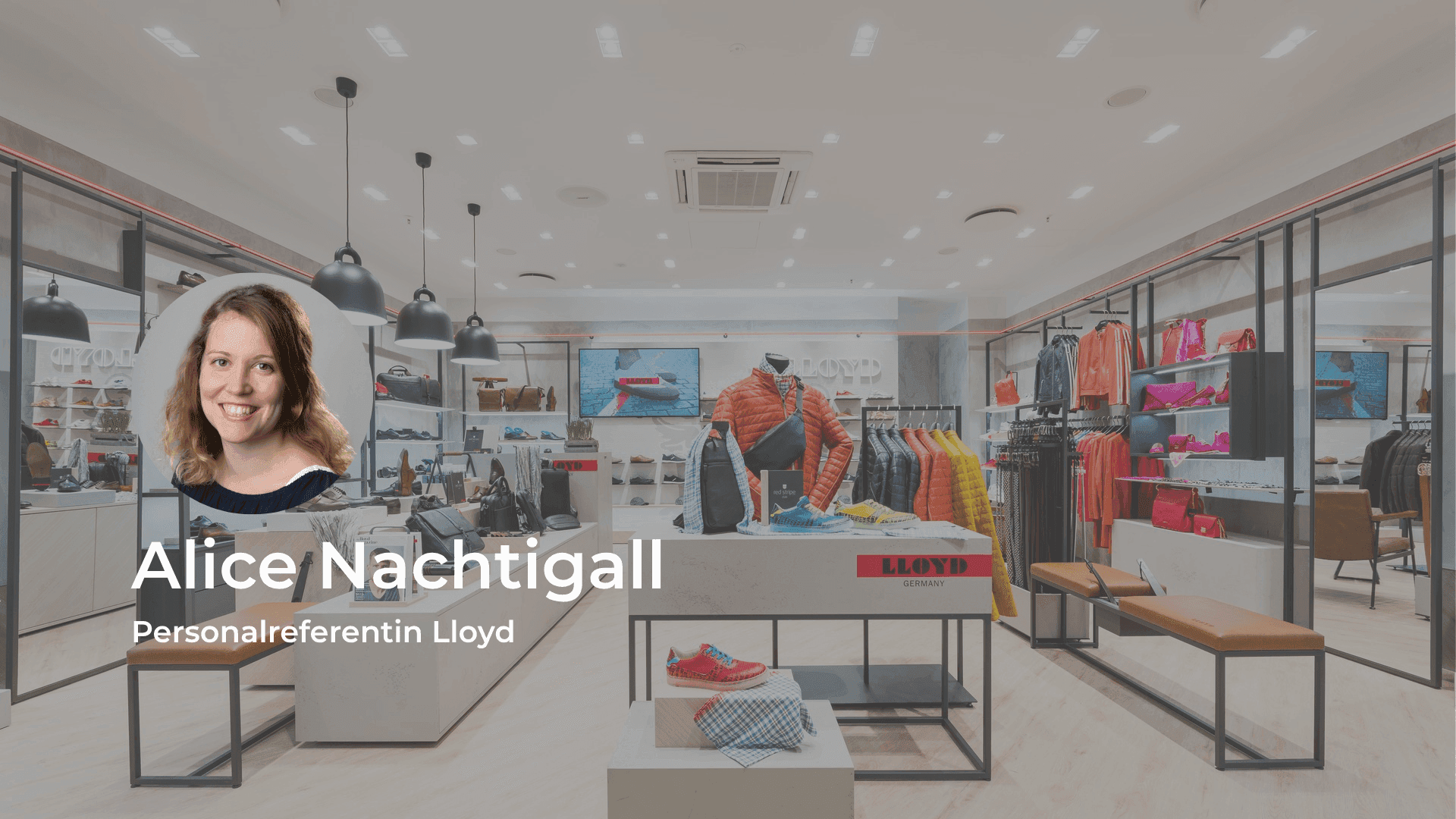
Alice Nachtigall – HR Business Partner – Lloyd
"Today, we work with an annual planning process that includes a daily revenue forecast based on historical data. The system recommends optimal staff scheduling throughout the day to store managers. This keeps our planning much closer to actual trading conditions, and we can make adjustments on a weekly basis with ease."
The Result: What Has Changed Since Then
Boost productivity, eliminate rigid scheduling — and give your team the planning reliability they need
The impact is felt across four dimensions: business performance, operational control, employee satisfaction, and stakeholder communication.
Business Management
Controls & Analytics
Employee Satisfaction
Stakeholder Communication
Alice Nachtigall – HR Business Partner – Lloyd
"We are clearly selling more shoes per labor hour invested."
Which building blocks Lloyd uses
Alice Nachtigall – HR Business Partner – Lloyd
"The support has been outstanding from day one — and that hasn't changed. Most other software vendors I know simply don't deliver at that level. What defines SEAK for me is effortless simplicity in every sense of the word. And reliability: they do what they say they'll do."
Let's talk about whether SEAK is the right fit for your business
In a 30-minute introductory call, we'll assess where your business stands today, identify which modules are the right priority for your situation, and outline a realistic implementation roadmap.
Alternatively, you're welcome to reach out via our contact form — we'll get back to you promptly. Or give us a call at: +49 40 238 348 – 000
The Trade Trusts SEAK
From fashion and food retail to building materials and specialist trade: retailers across Germany rely on SEAK to manage their workforce.
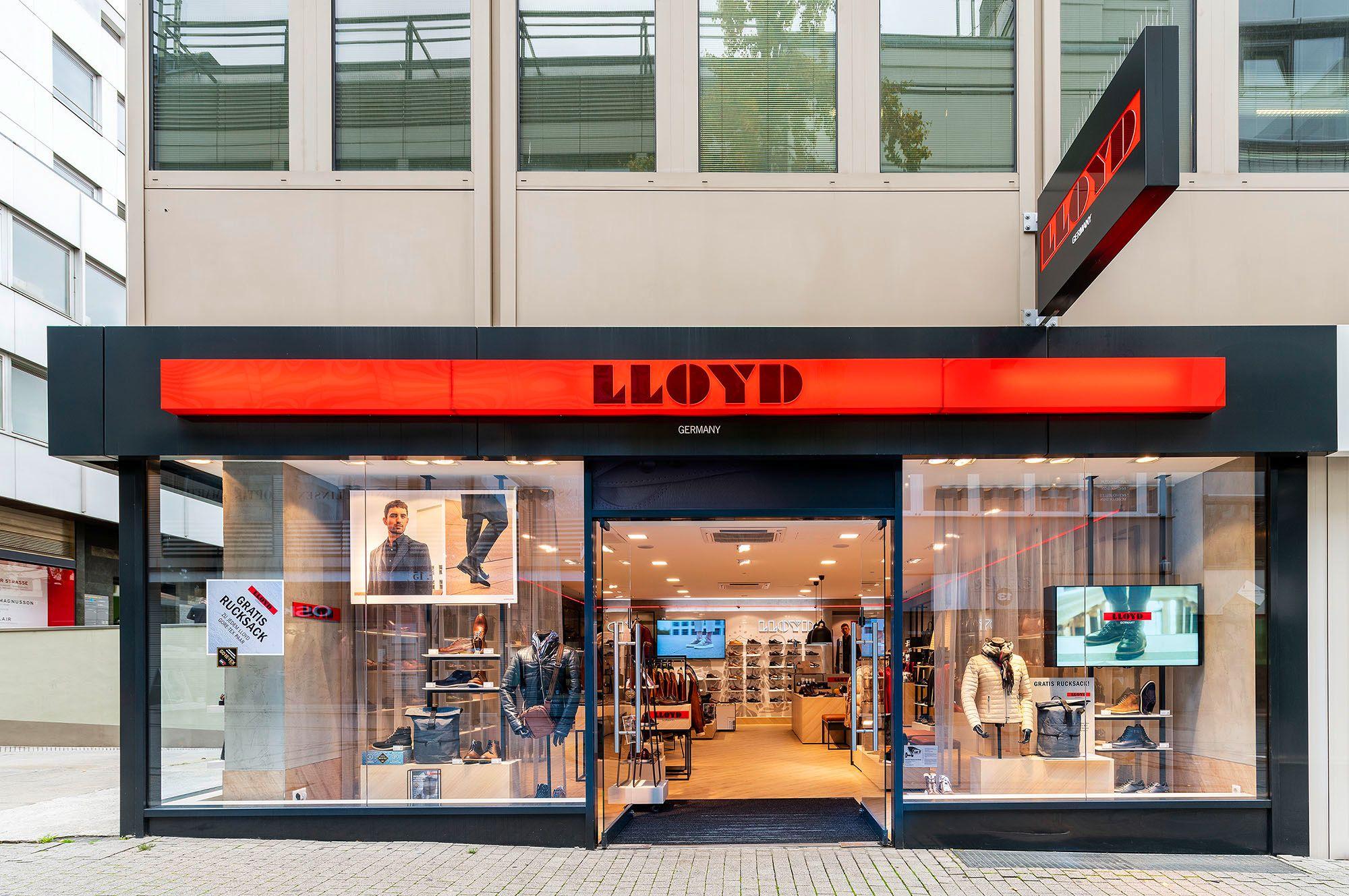
More than 130 Years of Premium Footwear – From Bremen to the World
Lloyd was founded in Bremen in 1888 as H. F.-Meyer-Schuhfabrik. The company was renamed Lloyd in 1927, and in 1942 relocated its headquarters to Sulingen, south of Bremen — where the brand's shoe business is still managed today, including exports to 48 countries, accounting for approximately 30% of total revenue.
The factors that have made Lloyd an international market leader in premium business footwear include exceptional craftsmanship, carefully selected materials, outstanding fit, and a distinctive design philosophy. With 13 subsidiaries, Lloyd employs around 1,500 people worldwide, more than 400 of whom are based in Germany.
Lloyd's premium footwear is available at approximately 2,800 retail locations. In the German market, the brand also operates 29 concept stores and 8 factory outlets — both retail channels, with a combined workforce of 200 employees, are managed directly by Lloyd. This is precisely where the partnership with SEAK comes in: optimizing workforce management across Lloyd's own retail operations.